1· Regulatory Compliance Advisory:
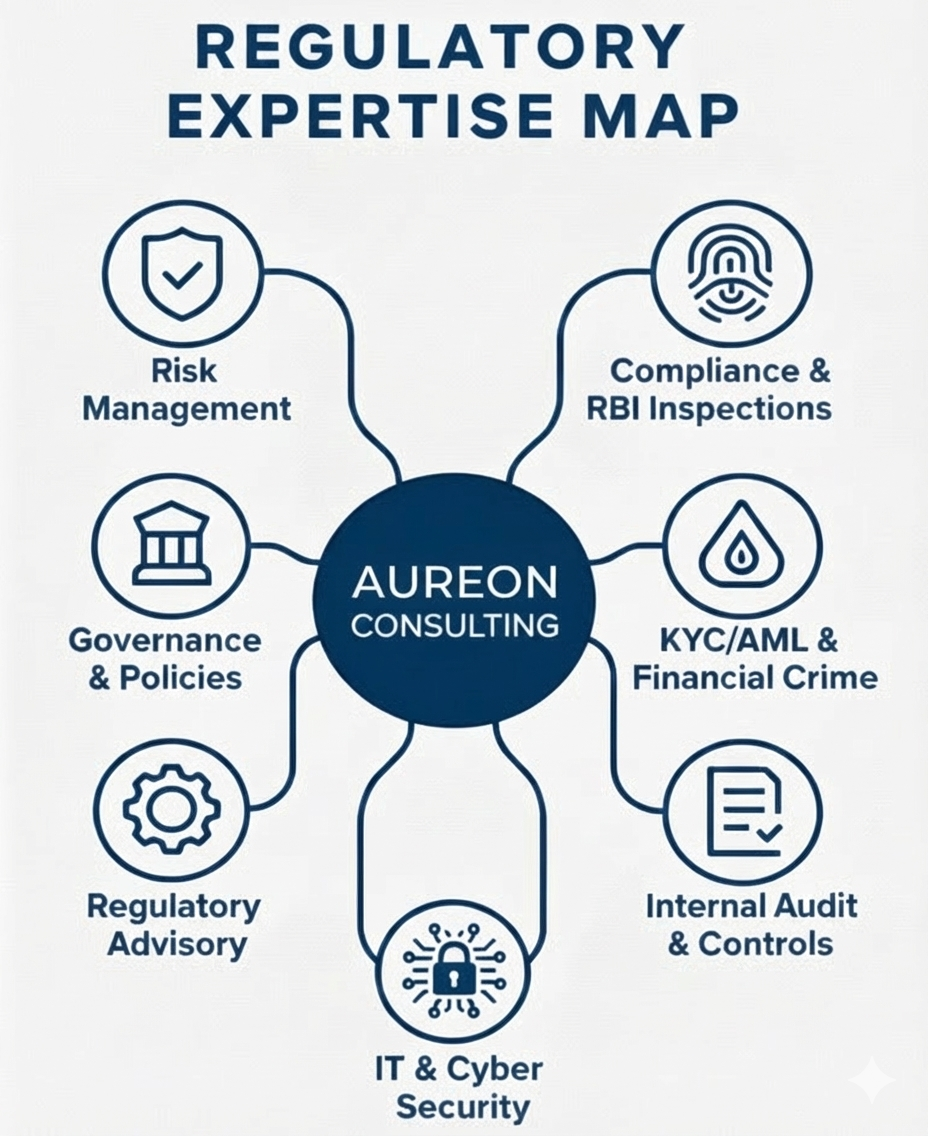
We interpret RBI/NBFC guidelines and create tailored compliance roadmaps. Whether it’s KYC/AML policies, fraud-risk frameworks or cybersecurity controls, we ensure your programs meet current standards. We have in-depth knowledge of RBI Master Directions, Basel norms, FEMA rules and more.
2· Risk Management:
We design and enhance frameworks for credit, market, liquidity, and operational risk. Our experts help set up committees (ALCO, FRC, LRC), implement Risk-Based Internal Audit (RBIA) and embed strong internal controls across the organization.
3· Fraud & Cybersecurity:
We develop enterprise-wide fraud risk management programs and cyber incident response plans. Our team conducts forensic reviews and vulnerability assessments to minimize losses and meet regulator expectations on cyber resilience.
4· KYC/AML & Financial Crime:
We advise on customer due-diligence, transaction monitoring and anti-money laundering programs. We draft and review procedures to satisfy RBI/FIU norms and protect against money laundering and financing of terrorism.
5· Internal Audit & Governance:
We strengthen corporate governance through board-level policies (risk committees, internal audit charters, AMC/FoC frameworks) and improve internal audit functions. We align your audit and control systems with RBI expectations and industry best practices.
6· FinTech & Digital Banking:
We guide digital lenders, payment banks and fintech ventures on compliance for new business models. This includes RBI’s Digital Lending Guidelines, payment system regulations and adopting RegTech tools.
7· Governance & Policy Architecture:
We design and refine policy architectures that connect board-approved policies, operating procedures and technology platforms, ensuring that compliance is embedded into daily operations rather than remaining a mere checklist exercise.
8· Technology-Enabled Compliance:
Our teams leverage RegTech, analytics, and workflow tools to help institutions move from manual, fragmented approaches to system-driven compliance. This includes automated monitoring, digital documentation, and dashboards that enhance the institution’s ability to respond to supervisory queries
Address
Room No-514 M1,Diamond Heritage
16, Strand Rd, Fairlie Place, B.B.D. Bag, Kolkata-700001
Contact Us
contact@aureon.org.in
+91 8252576554